SEARCH

    Language Settings
    Select Website Language

    GDPR Compliance

    We use cookies to ensure you get the best experience on our website. By continuing to use our site, you accept our use of cookies, Privacy Policies, and Terms of Service.
    Latest

    India Post GDS recruitment 2026: Registration for 28740 vacancies

    India Post has announced the registration schedule for the Gramin Dak Sevaks recruitment drive for 2026, opening applications for a total of 28,740 tentative vacancies across 23 postal circles. The recruitment will cover posts of Gramin Dak Sevaks (GDS), Branch Postmaster (BPM), and Assistant Branch Postmaster (ABPM). The official notification PDF is scheduled to be released on January 31, 2026, on the official portal indiapostgdsonline.gov.in. The hiring will be for those who have passed Class 10 and fall within the specified age group ranging from 18 to 40. India Post has confirmed that the selection process will be merit-based, and no written test will be held. Selection will be on merit, and marks from Class 10 will be taken into account, according to guidelines set forth. Notification of release of application schedule (tentative): The important dates related to the recruitment process have been communicated by the India Post department in their press release. The applicants can submit their application forms within the stipulated time frame. The important dates related to the recruitment process in India Post GDS recruitment 2026 are mentioned below:   Event Date Detailed notification release January 31, 2026 Beginning of online application January 31, 2026 Last date to apply online February 14, 2026 Online fee payment last date February 16, 2026 Application Correction Window Feb 18 - 19, 2026 Release of Merit List February 28, 2026 Posts, eligibility and selection process To the extent that the recruitment drive creates an opportunity for 10th pass candidates to be employed by the government, it becomes pivotal for the candidates to be aware of the requirements specified by the government for eligibility in terms of the corresponding ages and educational qualifications mentioned in the notification. The selection criteria for the candidates would be purely merit-based, calculated by the marks obtained by the candidates in class 10, for which any interview would be exempted. The structure of the monthly salaries is different depending upon the post. For ABPM and GDS posts, the scale of pay is from Rs. 10,000 to Rs. 24,470, while it is Rs. 12,000 to Rs. 29,380 for BPM posts. State-wise Vacancy Distribution Vacancies will be available for 28,740 positions, and these will be filled across various postal circles. The details regarding vacancies are described below. Postal circle Vacancies Postal circle Vacancies Andhra Pradesh 1,060 Assam 639 Bihar 1,347 Chhattisgarh 1,155 Delhi 42 Gujarat 1,830 Haryana 270 Himachal Pradesh 520 Jammu and Kashmir 267 Jharkhand 908 Karnataka 1,023 Kerala 1,691 Madhya Pradesh 2,120 Maharashtra 3,553 North Eastern 1,014 Odisha 1,191 Punjab 262 Rajasthan 634 Tamil Nadu 2,009 Telangana 609 Uttar Pradesh 3,169 Uttarakhand 445 West Bengal 2,982 Total 28,740 How to check and apply for India Post GDS Recruitment 2026 Step 1: Visit the official website at indiapostgdsonline.gov.in. Step 2: Click on the GDS Recruitment 2026 notification link available on the homepage. Step 3: Sign up with basic information and create your login credentials. Step 4: Fill in the application form online, attach the necessary documents, and pay the application fee online. Step 5: Fill and submit the form, with subsequent downloading of the confirmation page for future reference. Therefore, candidates are advised to go through the official notification PDF for category-wise vacancies and also check the eligibility criteria in detail before applying.  

    Padma Awards

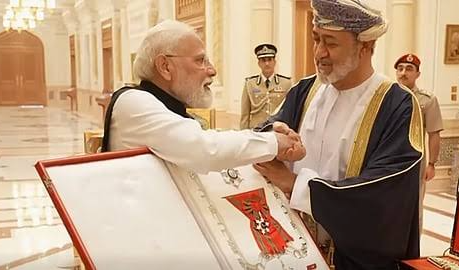
    Padma Awards The Padma Awards are one of the highest civilian honours of India announced annually on the eve of Republic Day. The Awards are given in three categories: Padma Vibhushan (for exceptional and distinguished service), Padma Bhushan (distinguished service of higher order) and Padma Shri (distinguished service). The award seeks to recognize achievements in all fields of activities or disciplines where an element of public service is involved. The Padma Awards are conferred on the recommendations made by the Padma Awards Committee, which is constituted by the Prime Minister every year. The nomination process is open to the public. Even self-nomination can be made. History :  The Government of India instituted two civilian awards-Bharat Ratna & Padma Vibhushan in 1954. The latter had three classes namely Pahela Varg, Dusra Varg and Tisra Varg. These were subsequently renamed as Padma Vibhushan, Padma Bhushan and Padma Shri vide Presidential Notification issued on January 8, 1955. Bharat Ratna Bharat Ratna is the highest civilian award of the country. It is awarded in recognition of exceptional service/performance of the highest order in any field of human endeavour. It is treated on a different footing from Padma Award. The recommendations for Bharat Ratna are made by the Prime Minister to the President of India. No formal recommendations for Bharat Ratna are necessary. The number of Bharat Ratna Awards is restricted to a maximum of three in a particular year. Government has conferred Bharat Ratna Award on 53 persons till date. Padma Awards Padma Awards, which were instituted in the year 1954, is announced every year on the occasion of Republic Day except for brief interruption(s) during the years 1978 and 1979 and 1993 to 1997. The award is given in three categories, namely, Padma Vibhushan for exceptional and distinguished service; Padma Bhushan for distinguished service of a high order; and Padma Shri for distinguished service.   All persons without distinction of race, occupation, position or sex are eligible for these awards. However, Government servants including those working with PSUs, except doctors and scientists, are not eligible for these Awards. The award seeks to recognize works of distinction and is given for distinguished and exceptional achievements/service in all fields of activities/disciplines. An illustrative list of the fields is as under: Art (includes Music, Painting, Sculpture, Photography, Cinema, Theatre etc.) Social work (includes social service, charitable service, contribution in community projects etc.) Public Affairs (includes Law, Public Life, Politics etc.) Science & Engineering (includes Space Engineering, Nuclear Science, Information Technology, Research & Development in Science & its allied subjects etc.) Trade & Industry (includes Banking, Economic Activities, Management, Promotion of Tourism, Business etc.) Medicine (includes medical research, distinction/specialization in Ayurveda, Homeopathy, Sidhha, Allopathy, Naturopathy etc.) Literature & Education (includes Journalism, Teaching, Book composing, Literature, Poetry, Promotion of education, Promotion of literacy, Education Reforms etc.) Civil Service (includes distinction/excellence in administration etc. by Government Servants) Sports (includes popular Sports, Athletics, Adventure, Mountaineering, promotion of sports, Yoga etc.) Others (fields not covered above and may include propagation of Indian Culture, protection of Human Rights, Wild Life protection/conservation etc.) The award is normally not conferred posthumously. However, in highly deserving cases, the Government could consider giving an award posthumously. A higher category of Padma award can be conferred on a person only where a period of at least five years has elapsed since conferment of the earlier Padma award. However, in highly deserving cases, a relaxation can be made by the Awards Committee. The awards are presented by the President of India usually in the month of March/April every year where the awardees are presented a Sanad (certificate) signed by the President and a medallion. The recipients are also given a small replica of the medallion, which they can wear during any ceremonial/State functions etc., if the awardees so desire. The names of the awardees are published in the Gazette of India on the day of the presentation ceremony. The total number of awards to be given in a year (excluding posthumous awards and to NRI/foreigners/OCIs) should not be more than 120. The award does not amount to a title and cannot be used as a suffix or prefix to the awardees’ name Who decides All nominations received for Padma Awards are placed before the Padma Awards Committee, which is constituted by the Prime Minister every year. The Padma Awards Committee is headed by the Cabinet Secretary and includes Home Secretary, Secretary to the President and four to six eminent persons as members. The recommendations of the committee are submitted to the Prime Minister and the President of India for approval.

    UN High Seas Treaty Comes Into Effect

    News : A UN-backed treaty on biodiversity in international waters, formally known as the Biodiversity Beyond National Jurisdiction (BBNJ) Treaty, has entered into force, creating the first legally binding global framework to conserve and sustainably use the high seas. What are the High Seas? High seas refer to ocean areas beyond national jurisdiction, i.e., beyond 200 nautical miles (Exclusive Economic Zones – EEZs). They cover nearly two-thirds of the global ocean and about half of the Earth’s surface. Earlier governed mainly by general principles under UNCLOS, with limited biodiversity-specific regulation. Biodiversity Beyond National Jurisdiction (BBNJ) Treaty Adoption & Background: The Biodiversity Beyond National Jurisdiction (BBNJ) Agreement was adopted in 2023 by an Intergovernmental Conference on Marine Biodiversity of Areas Beyond National Jurisdiction, convened under the auspices of the United Nations. Legal Status under UNCLOS: It is the third implementing agreement under the United Nations Convention on the Law of the Sea (UNCLOS), after: 1994 Part XI Implementation Agreement (Deep Seabed Mining) 1995 UN Fish Stocks Agreement. Objective: To ensure the conservation and sustainable use of marine biological diversity in Areas Beyond National Jurisdiction (ABNJ), commonly known as the high seas. Institutional & Financial Mechanisms: Establishes a Conference of the Parties (COP) as the decision-making body. Creates a Clearing-House Mechanism for data, knowledge, and cooperation. Sets up a Secretariat and a dedicated funding mechanism to support implementation. Membership Status: 83 countries have ratified the treaty so far & India has signed but not yet ratified the BBNJ Agreement. Significance of the BBNJ Treaty  Governance of the Global Commons: The treaty provides the first comprehensive legal framework for biodiversity protection in Areas Beyond National Jurisdiction (ABNJ), which constitute nearly two-thirds of the global ocean. Earlier, high seas fishing faced weak regulation, enabling overfishing of migratory species like tuna; BBNJ allows ecosystem-based management. Advancement of the “30×30” Target: Supports the global goal of protecting 30% of oceans by 2030 through Marine Protected Areas (MPAs) in the high seas. Mandatory Environmental Impact Assessments (EIAs): Requires prior EIAs for activities that may cause significant harm to marine ecosystems. Equity through Marine Genetic Resources (MGRs): Introduces fair and equitable benefit-sharing from marine genetic resources used in pharmaceuticals, cosmetics, and biotechnology. Capacity Building for Developing Countries: Promotes technology transfer, scientific cooperation, and funding support. Strengthening Multilateralism: Reinforces faith in rules-based global order under the United Nations, especially at a time of fragmented global governance. Concerns and Limitations of the BBNJ Treat Deep-Sea Mining Excluded: The treaty does not regulate seabed mining, which remains under the International Seabed Authority (ISA). Implementation Challenges: Monitoring and enforcement in vast high seas is technically and financially demanding. Like developing countries may struggle to conduct EIAs or participate effectively in COP processes. Non-Universal Ratification: The United States has signed but not ratified, limiting compliance by major maritime powers. Soft Compliance Mechanisms: The treaty relies more on cooperation than coercive enforcement, raising concerns over compliance. Example: Illegal, Unreported, and Unregulated (IUU) fishing may persist despite new norms. Source: Firstpost

    Shaksgam Valley

    Shaksgam Valley News :  India has reiterated that Shaksgam Valley is part of its sovereign territory and rejected the 1963 China–Pakistan Boundary Agreement, calling it illegal and invalid. India also reaffirmed its opposition to the China–Pakistan Economic Corridor (CPEC) as it passes through Indian territory under illegal occupation. Shaksgam Valley Also known as the Trans-Karakoram Tract. Lies north of the Siachen Glacier, in the region of Ladakh. Historically part of the former princely state of Jammu and Kashmir. Currently under Chinese control, Pakistan illegally ceded Shaksgam Valley to China following the 1963 China–Pakistan Boundary Agreement. Source: TOI ​

    DRDO : Development of Hypersonic Missiles

    News : Defence Research and Development Organisation (DRDO) has achieved a key milestone in the development of hypersonic missiles. About DRDO has successfully conducted an extensive long-duration ground test of its Actively Cooled Scramjet Full Scale Combustor at the state-of-the-art Scramjet Connect Pipe Test (SCPT) facility.  The trial achieved a run time of over 12 minutes, marking a path-breaking milestone in the development of hypersonic missile technology. The test was conducted by the Defence Research and Development Laboratory (DRDL), Hyderabad-based premier facility of the DRDO responsible for the design and development of state-of-the-art missile systems and technologies. Hypersonic Missiles The Hypersonic Cruise Missile is capable of exceeding five times the speed of sound (over 6,100 km/hr) for extended periods. The speed is achieved through a cutting-edge air-breathing engine, which utilises supersonic combustion to sustain long-duration flight. These missiles are also more maneuverable, which allows them to more easily evade air defence systems. The two types of hypersonic weapons systems are Hypersonic Glide Vehicles (HGV) and Hypersonic Cruise Missiles. The HGVs are launched from a rocket before gliding to the intended target while HCMs are powered by air-breathing high-speed engines or ‘scramjets’ after acquiring their target. Types of Missile Systems in India Ballistic Missiles: Ballistic missiles are designed to deliver a payload (usually a warhead) over long distances using a ballistic trajectory. Due to their long-range capabilities and substantial payloads, ballistic missiles serve as deterrents and are integral to a nation’s strategic defence posture. Short-Range Ballistic Missiles (SRBM) includes Prithvi I, II, III.  Medium-Range Ballistic Missiles (MRBM) are Agni-I, II, III, IV, V. Cruise Missiles: Cruise missiles are guided missiles that use aerodynamic lift to travel through the atmosphere, typically at subsonic or supersonic speeds. Valued for their precision and flexibility, cruise missiles are often employed in tactical scenarios to eliminate specific targets with minimal collateral damage. The Long-Range Cruise Missile is Nirbhay. BrahMos is a supersonic cruise missile. Source: IE

    Article 6 of the Paris Agreement and India

    News : The adoption of the Paris Agreement Crediting Mechanism (Article 6.4) at COP29 in Baku marked a significant transition from the Clean Development Mechanism. This mechanism aims to enhance the efficiency of climate finance and operationalize carbon markets under Article 6 of the Paris Agreement. Carbon Market Collaborations The A6 Implementation Partnership records 89 cooperation arrangements under Article 6.2, involving 58 Parties, showcasing the growing trend in bilateral and plurilateral collaborations. India's Joint Crediting Mechanism (JCM), initiated in 2025, signifies the operationalization of Article 6.2, marking a new phase in international climate cooperation. What is Article 6 of the Paris Agreement? Article 6 creates a framework that allows countries to cooperate voluntarily to achieve their Nationally Determined Contributions (NDCs) through two main routes: Article 6.2: Enables bilateral or plurilateral cooperation through the trading of emission reductions, called Internationally Transferred Mitigation Outcomes (ITMOs). Article 6.4: Establishes a centralized Paris Agreement Crediting Mechanism (PACM), evolved from the earlier Clean Development Mechanism (CDM), to validate and verify projects generating carbon credits. Both mechanisms are backed by strong accounting rules to avoid double counting and ensure transparency and environmental integrity. India and the Joint Crediting Mechanism India’s entry into Article 6 through its JCM partnership with Japan represents the operationalisation of Article 6.2. The JCM framework will facilitate the adoption of low-carbon and advanced industrial technologies, offering mutual benefits—emissions reduction for Japan and technology transfer and finance for India. The Indian government has identified 13 eligible activities under A6, focusing on high-impact, emerging technologies such as: Renewable energy with storage and offshore wind Green hydrogen and compressed bio-gas Sustainable aviation fuel and fuel-cell mobility High-end energy efficiency applications Carbon capture, utilisation, and storage (CCUS) These reflect a strategic alignment between India’s growth priorities and long-term decarbonisation goals, particularly for industries like steel, cement, and power generation. Key Policy Priorities Strengthen the Domestic Carbon Governance Framework: India’s Designated National Authority (DNA) must define clear procedures for: Issuing Letters of Authorisation (LoAs) for A6 projects. Managing corresponding adjustments to prevent double counting. Establishing a robust legal and regulatory architecture for carbon trading. Streamline Project Approvals: A Cabinet-level steering committee and single-window clearance system can drastically cut approval timelines. Current voluntary carbon projects take over 1,600 days to register—four times slower than regional peers. Develop a Domestic Carbon Removals Market: With rising global demand, India can position itself as a key supplier of high-quality removal credits through biochar, enhanced rock weathering, and afforestation-based projects. Promote South–South Collaboration: India’s leadership in institutions like ISA, CEM, and BASIC can catalyze shared platforms for knowledge exchange and co-investment among developing economies. Source: TH

    RITES Recruitment 2025

    Rail India Technical and Economic Service or RITES Limited, the government-owned consultancy under the Ministry of Railways, has opened applications for 150 Senior Technical Assistant (STA) posts in the Mechanical engineering stream. The online registration began on 9 December 2025 and will close on 30 December 2025. The written examination is scheduled for 11 January 2026. RITES STA recruitment details Candidates interested in registering for the RITES recruitment drive may check the details mentioned in the table below: Parameter Details Employer RITES Limited (Government-owned PSU under Ministry of Railways) Post Senior Technical Assistant (Mechanical) Total Vacancies 150 Application Start Date 09 December 2025 Last Date to Apply 30 December 2025 Written Exam Date 11 January 2026 Monthly Remuneration ₹29,735 approx. (CTC) Basic Pay ₹16,338 per month approx. Application Fee ₹300 + taxes (General/OBC), ₹100 + taxes (EWS/SC/ST/PwBD) Eligibility criteria In order to be eligible for the recruitment process, candidates must meet the following criteria: Educational Qualification: Full-time Diploma in Mechanical / Production / Manufacturing / Industrial / Automobile / related engineering streams from AICTE/BTE-recognized institutes. Candidates with higher qualifications (Degree/PG) in the same discipline are also eligible. Work Experience: Minimum 2 years of post-qualification experience in the relevant discipline is mandatory. Age Limit: Maximum age: 40 years as on 30 December 2025. Relaxations apply as per government norms for OBC, SC, ST, PwBD, and other eligible categories. Vacancy distribution The RITES recruitment process is open for 150 vacancies. Check region-wise distribution of vacancies below: Region Number of Posts North 50 East 75 West 10 South 15 How to apply for RITES recruitment Interested and eligible candidates can register for RITES recruitment process by following the steps mentioned below: Visit the official website: Go to rites.com and navigate to the “Career” or “Recruitment” section. Read the notification: Carefully check eligibility, post details, and key dates before starting the application. Register / create login: Click “Apply Online” and create a login ID with basic personal details. Fill educational and professional details: Enter diploma/degree, institute, passing year, and relevant work experience. Upload documents: Upload scanned photo, signature, mark sheets, diploma/degree, experience, and category/PwBD certificates. Pay application fee: Pay ₹300 (General/OBC) or ₹100 (EWS/SC/ST/PwBD) online. Preview and submit: Verify all details carefully and submit the application. Print and save: Download and print the confirmation and payment receipt for future reference. Direct link to apply here. Note: For more information about RITES recruitment process, candidates are advised to visit the official website, rites.com.  

    RBI Financial Stability Report

    News : The Reserve Bank of India’s December 2025 Financial Stability Report (FSR) assesses systemic risks to India’s financial sector and evaluates the resilience of banks amid domestic strength and global uncertainties. Key highlights of the report Growth outlook remains positive: The RBI noted that real GDP growth surprised on the upside in the first two quarters of FY 2025-26, registering 7.8% in Q1 and 8.2% in Q2. Growth was supported by strong private consumption and public investment. Improvement in Banks’ Asset Quality: The asset quality of Scheduled Commercial Banks (SCBs) has improved further. The Gross Non-Performing Assets (GNPA) ratio declined to 2.1% in September 2025. Strong recoveries, prudent lending practices, and better risk management have supported this improvement. Capital buffers remain adequate: The capital to risk-weighted assets ratio (CRAR) remained strong as of September 2025, with public sector banks at 16% and private sector banks at 18.1%.  Unsecured Loans Emerging as a Key Vulnerability: Unsecured loans accounted for 53.1% of total retail loan slippages. Unsecured loans contributed nearly 76% of slippages for private banks, compared with 15.9% for public sector banks. Fintech Lending: The RBI flagged elevated impairment among borrowers who have taken unsecured loans from five or more lenders, highlighting the role of fintech firms. Over 70% of fintech loan portfolios consist of unsecured loans. Stablecoins risks to monetary sovereignty: The RBI reiterated concerns that stablecoins could undermine central banks’ ability to regulate money supply and financial stability. The risks posed by stablecoins, especially those denominated in foreign currencies, could erode monetary sovereignty and weaken monetary policy transmission. Rupee Depreciation: The rupee depreciated against the US dollar due to falling terms of trade, high tariffs and a slowdown in capital flows.  Financial Stability Report (FSR) The Financial Stability Report (FSR) is a biannual publication by the Reserve Bank of India (RBI) that assesses the stability and resilience of the Indian financial system. It offers insights into the health of various components of the financial sector, including banking, non-banking financial institutions (NBFCs), mutual funds, insurance companies, and financial markets. Source: TOI

    PM chairs 50th meeting of PRAGATI

    The Prime Minister chaired the 50th meeting of PRAGATI. About PRAGATI (Pro-Active Governance And Timely Implementation) is a technology-driven governance and monitoring platform launched by the Prime Minister’s Office (PMO) in 2015. Aim: To improve public administration and accelerate implementation of government programmes and projects. PRAGATI functions as a tripartite platform integrating three hierarchical levels: the Prime Minister’s Office at the apex, Union Government Secretaries as the middle tier, and State Chief Secretaries as the operational base. Salient Features of PRAGATI:  PM chairs 50th meeting of pragati The primary purposes of PRAGATI are: Project Monitoring: Track progress of high-value and critical infrastructure projects and resolve delays or bottlenecks.  Programme Implementation: Ensure timely and efficient execution of government schemes and missions.  Grievance Redressal: Address persistent public grievances by integrating with systems like Centralised Public Grievance Redressal and Monitoring System (CPGRAMS) for citizen complaints. Key Achievements 377 projects have been reviewed under PRAGATI, and across these projects, 2,958 out of 3,162 identified issues – i.e. around 94% have been resolved. Several projects that had remained stalled for decades were completed or decisively unlocked after being taken up under the PRAGATI platform. Conclusion PRAGATI represents an institutional innovation that addresses fundamental challenges in India’s developmental governance—project execution delays, inter-governmental coordination failures, and accountability deficits.  The platform exemplifies how strategic technology deployment combined with high-level accountability can transform governance effectiveness. Source: PIB

    Right to Disconnect Bill, 2025

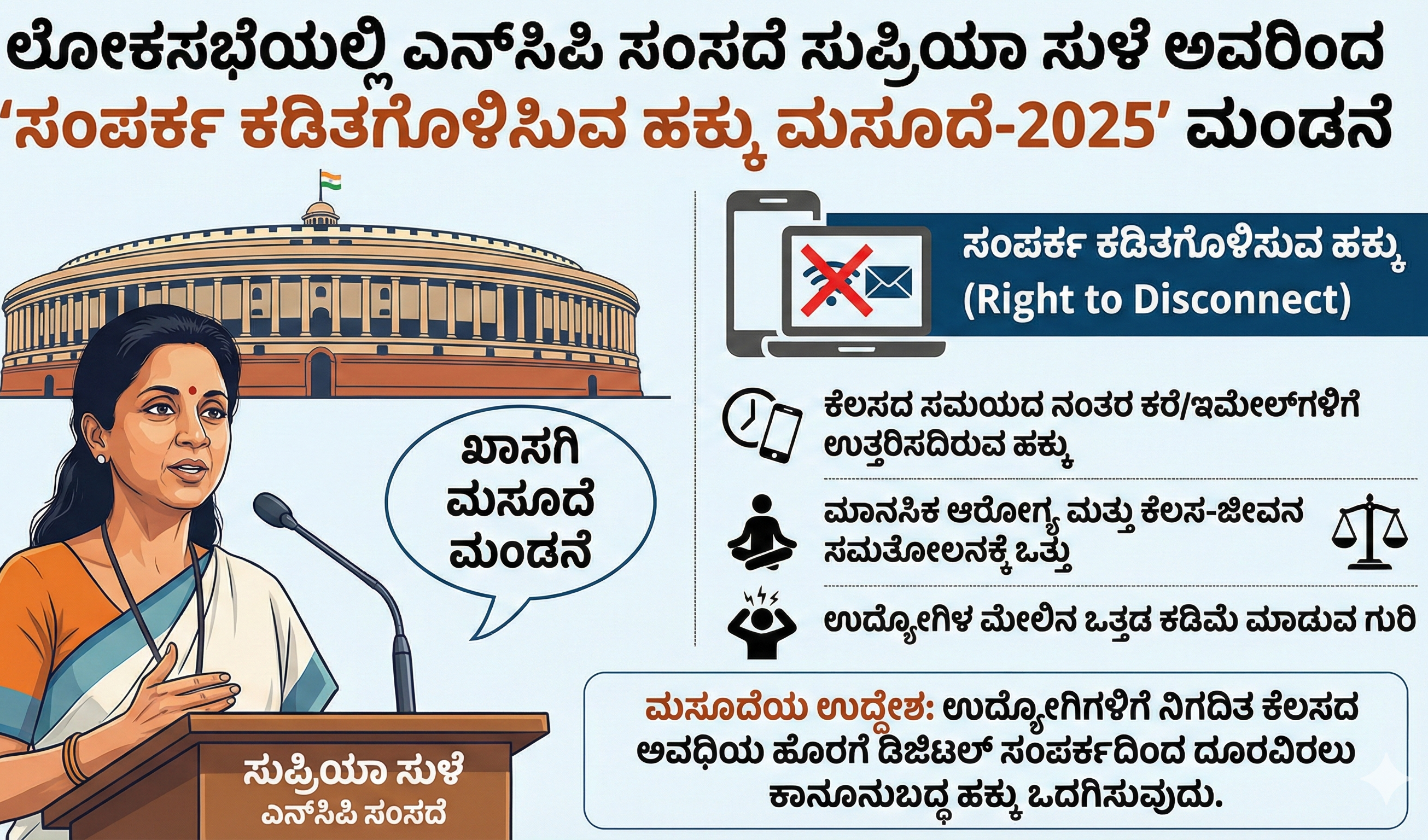
    News : A private member bill “Right to Disconnect Bill, 2025”, reintroduced in the Lok Sabha. In an era where the office follows you home in your pocket, the blurring line between professional and personal life has ignited a global conversation about a worker's fundamental right to log off. At its core, the 'Right to Disconnect' is a principle that protects an employee's time away from the job. The Right to Disconnect refers to an employee’s right to not engage in work-related communications—such as calls, emails, or messages—outside official working hours. The primary goal of this right is to shield workers from the pressures of constant digital connectivity, aiming to restore and protect a healthy work-life balance. This growing concern has led to concrete legislative proposals, such as the one recently introduced in India.   The 2025 'Right to Disconnect' Bill in India A proposal titled the "Right to Disconnect Bill, 2025" has been reintroduced in the Lok Sabha as a private member bill, seeking to formalize these protections into law for Indian workers.   Key Protections and Mandates Proposed in the Bill • Right to refuse after-hours communication: This gives employees the legal freedom to ignore work-related calls, emails, and messages after their shift ends without facing any disciplinary action. • Establishment of an Employees’ Welfare Authority: This dedicated body would be responsible for implementing the rules and monitoring compliance, acting as a watchdog for employee rights. • A national baseline study on digital communication burdens: This research would provide crucial data to understand the true scale of the digital burden placed on employees outside of work hours. • Mandatory negotiations for companies with over 10 workers: This requires companies to formally agree with their employees on rules for after-hours work, ensuring that any such work qualifies for overtime pay. • Creation of counselling services and digital detox centres: This provides direct support to help employees manage the mental and emotional stress associated with constant connectivity. • Penalties for companies that violate the rules: This creates a significant financial incentive for companies to comply, with fines of up to 1% of their total employee remuneration. Did You Know? Understanding a 'Private Member’s Bill' • It is a legislative proposal introduced by a Member of Parliament (MP) who is not a government minister. • Parliament typically debates these bills only on Fridays, and they are rarely enacted into law. • Since India's Independence, only 14 private members’ bills have become law, with the last one passed in 1970. While this bill charts a potential course for India, it is part of a much larger global conversation. Global Adoption of This Right The concept of a right to disconnect is not unique to India; it is part of a growing international movement to adapt labor laws to the digital age. • About two dozen countries, primarily in Europe and Latin America, have already implemented similar regulations. • France was a pioneer in this area, formally establishing a right to disconnect for its workers in 2017. • Australia is one of the most recent adopters, enacting its own laws to protect workers' off-hours in 2024. This international momentum raises the question of where India's current legal framework stands on the broader issue of worker welfare. What is the Current Law in India? Currently, India does not have a specific law that explicitly recognizes an employee's 'Right to Disconnect'. However, the Indian Constitution contains broader principles that direct the government to ensure the well-being of its workforce. • Article 38 This article mandates that the state must strive to promote the welfare of the people. • Article 39(e) This article is part of the Directive Principles of State Policy and directs the state to formulate its policy towards securing the health and strength of its workers. Ultimately, the 'Right to Disconnect' is a modern response to a timeless challenge, seeking to ensure that in an always-on world, work enhances life rather than consumes it.

    Hornbill Festival 2025

    News : The Hornbill Festival 2025 will once again span ten days, from 1 to 10 December 2025, at Kisama Heritage Village, located just outside Kohima. Hornbill Festival is celebrated in Nagaland to encourage inter-tribal interaction. It is one of the largest indigenous festival organised by the state government of Nagaland to promote tourism in the state. Hornbill Festival It was first organized in the year 2000. It aims to promote inter-tribal interaction and preserve Nagaland’s heritage, blending the traditional with the contemporary in a harmonious display of unity. It is also called the festival of festivals and is held every year. Organised by: It is organized by the State Tourism and Art & Culture Departments of the Government of Nagaland. It is celebrated at Naga Heritage Village, Kisama which is about 12 km from Kohima in Nagaland. It has evolved into a celebration showcasing the diverse and vibrant cultural and traditional heritage of the tribes of Nagaland. It was named after the Hornbill bird given its association with the socio-cultural life of the Nagas. Theme of 2025 festival:  Cultural Connect This year Nagaland has officially named Switzerland and Ireland as country partners for the Hornbill Festival 2025.